
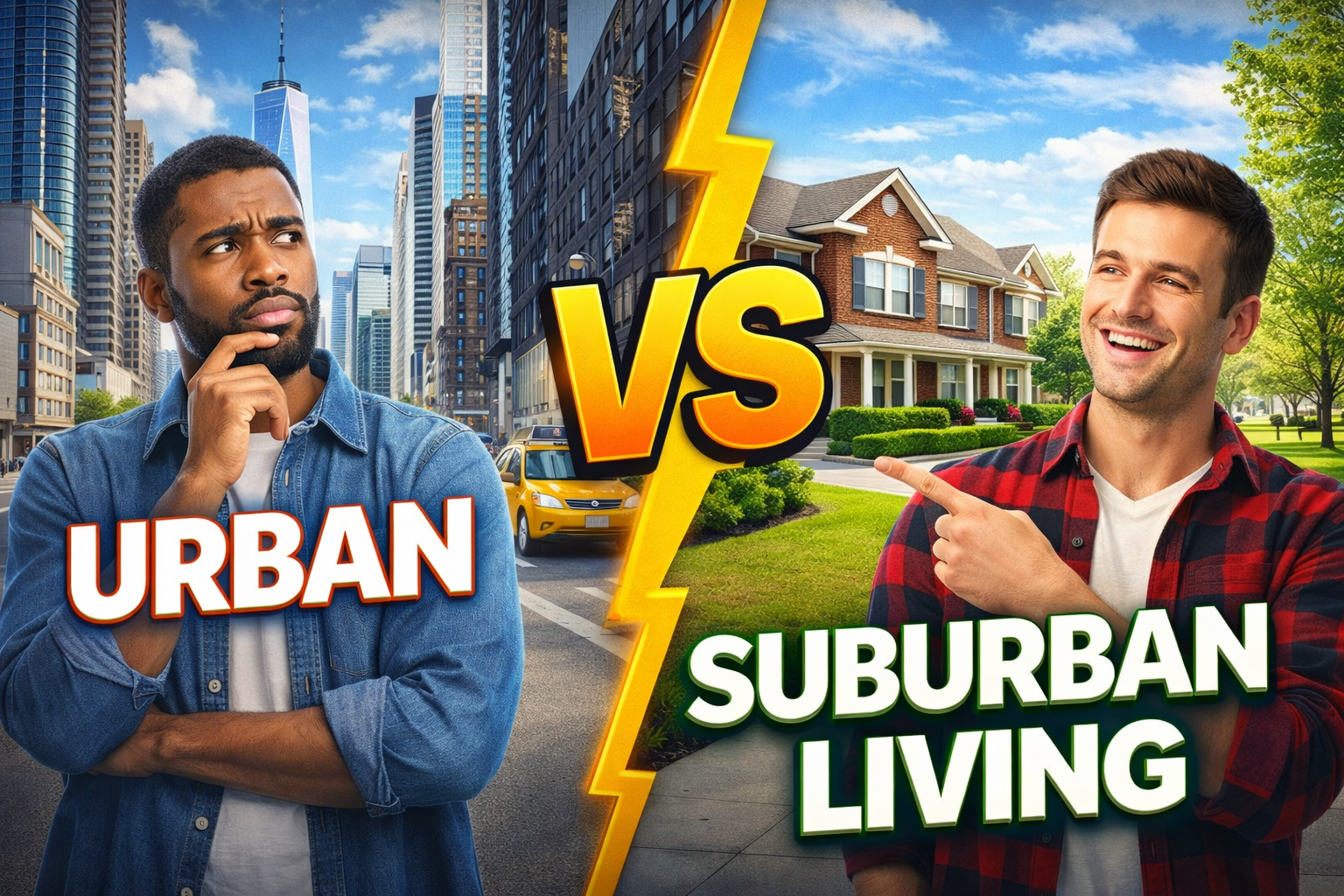
Urban vs Suburban Living: Which Is Better in 2026? A Complete Lifestyle & Investment Comparison
Urban vs suburban living in 2026—discover the key differences in cost, lifestyle, real estate value, and investment potential to decide which option suits you best.
Table of Contents
Introduction Of Urban vs Suburban Living
The debate between urban and suburban living has evolved significantly in recent years. While cities once dominated as the center of work, culture, and convenience, suburban areas are now experiencing a major resurgence due to changing lifestyles, remote work, and affordability concerns.
In 2026, choosing between urban and suburban living is no longer just about location—it’s about priorities, financial goals, and quality of life. Both options offer distinct advantages depending on whether you are a homeowner, renter, or real estate investor.
This guide explores the key differences to help you decide which environment aligns best with your needs.
What Defines Urban Living?
Urban living refers to residing in densely populated city centers with close proximity to business districts, entertainment hubs, and public infrastructure.
Key Characteristics:
- High-rise apartments and condominiums
- Walkable neighborhoods with strong transit systems
- Access to restaurants, offices, and cultural venues
- Faster-paced lifestyle
- Higher property prices per square foot
Urban environments attract professionals, young families, and those seeking convenience and connectivity.
What Defines Suburban Living?
Suburban living typically occurs in residential communities located outside major cities, offering more space and a quieter environment.
Key Characteristics:
- Independent homes, townhouses, and gated communities
- Lower population density
- Greater living space and greenery
- Car-dependent transportation
- Family-oriented neighborhoods
Suburbs are increasingly appealing to buyers prioritizing comfort, affordability, and long-term stability.
Major Factors Driving the Shift in 2026
1. Remote & Hybrid Work Culture
With flexible work becoming permanent in many industries, proximity to offices is less critical. This allows people to live farther from city centers without sacrificing career opportunities.
2. Rising Urban Costs
Major global cities continue to face high housing costs, encouraging buyers to consider suburban alternatives offering better value.
3. Demand for Larger Living Spaces
Post-pandemic lifestyle changes increased demand for:
- Home offices
- Outdoor areas
- Multi-functional living spaces
Suburbs naturally provide these advantages.
4. Infrastructure Expansion
Improved highways, metro extensions, and digital connectivity have made suburban areas more accessible than ever.
Cost Comparison: Urban vs Suburban
| Factor | Urban Living | Suburban Living |
|---|---|---|
| Property Prices | Higher per sq. ft. | More space for same cost |
| Rent | Premium pricing | Generally lower |
| Transportation | Public transit-friendly | Often requires a car |
| Utilities & Maintenance | Smaller spaces, lower usage | Larger homes, higher utilities |
| Lifestyle Spending | Higher entertainment costs | Lower day-to-day expenses |
Suburban living often provides greater financial efficiency, especially for families and long-term homeowners.
Lifestyle Differences
Urban Lifestyle Benefits:
✔ Immediate access to work and social hubs
✔ Diverse cultural and entertainment options
✔ Strong networking opportunities
✔ Reduced commute times (within city core)
✔ Ideal for fast-paced careers
Suburban Lifestyle Benefits:
✔ Peaceful, less crowded environments
✔ Larger homes and outdoor areas
✔ Better suited for families and long-term living
✔ Lower noise and pollution levels
✔ Strong sense of community
The choice largely depends on whether one values convenience or comfort.
Real Estate Investment Perspective
From an investment standpoint, both markets offer unique advantages.
Urban Investment Advantages:
- High rental demand from professionals
- Strong liquidity and resale markets
- Premium appreciation in prime locations
- Attractive for short-term rental strategies
Suburban Investment Advantages:
- Lower acquisition costs
- Increasing migration-driven demand
- Stable long-term tenants (families)
- Expansion corridors showing strong appreciation
In 2026, suburban real estate is increasingly seen as a growth market, while urban cores remain premium but mature markets.
Who Should Choose Urban Living?
Urban environments are ideal for:
- Young professionals building careers
- Individuals who prefer walkable lifestyles
- Entrepreneurs needing proximity to business districts
- Investors targeting rental income from working populations
City living emphasizes accessibility and speed.
Who Should Choose Suburban Living?
Suburban settings are best suited for:
- Families seeking space and safety
- Remote workers wanting better work-life balance
- Long-term homeowners prioritizing affordability
- Investors targeting steady appreciation
Suburbs focus on sustainability and lifestyle comfort.
Environmental and Wellness Considerations
Suburban communities often provide:
- Cleaner air and more green spaces
- Lower stress environments
- Greater opportunities for outdoor living
Urban areas, however, are improving through:
- Smart city planning
- Mixed-use developments
- Sustainable vertical housing
The future lies in blending both models into integrated urban-suburban ecosystems.
Hybrid Living: The Emerging Trend
A new concept gaining traction is “urban-suburban hybrid living.”
This includes:
- Satellite cities connected to metros
- Mixed-use townships combining work and housing
- Smart residential corridors outside city centers
- Transit-oriented developments
These areas provide city-level amenities with suburban comfort, making them highly attractive in 2026.
Future Outlook: What to Expect by 2030
Experts predict:
- Continued suburban expansion due to affordability
- Urban centers evolving into lifestyle and innovation hubs
- Smart infrastructure connecting suburbs seamlessly
- Increased demand for planned communities
- Balanced growth rather than city dominance
The rigid divide between urban and suburban living is gradually disappearing.
Conclusion
The choice between urban and suburban living in 2026 ultimately depends on personal priorities, career flexibility, and financial goals. Cities remain unmatched for accessibility and vibrancy, while suburbs are redefining modern living through space, affordability, and quality of life.
Rather than competing, urban and suburban environments are becoming complementary parts of a more flexible global housing landscape.
The smartest decision is not about which is universally better—but which is better for your lifestyle and long-term vision.