
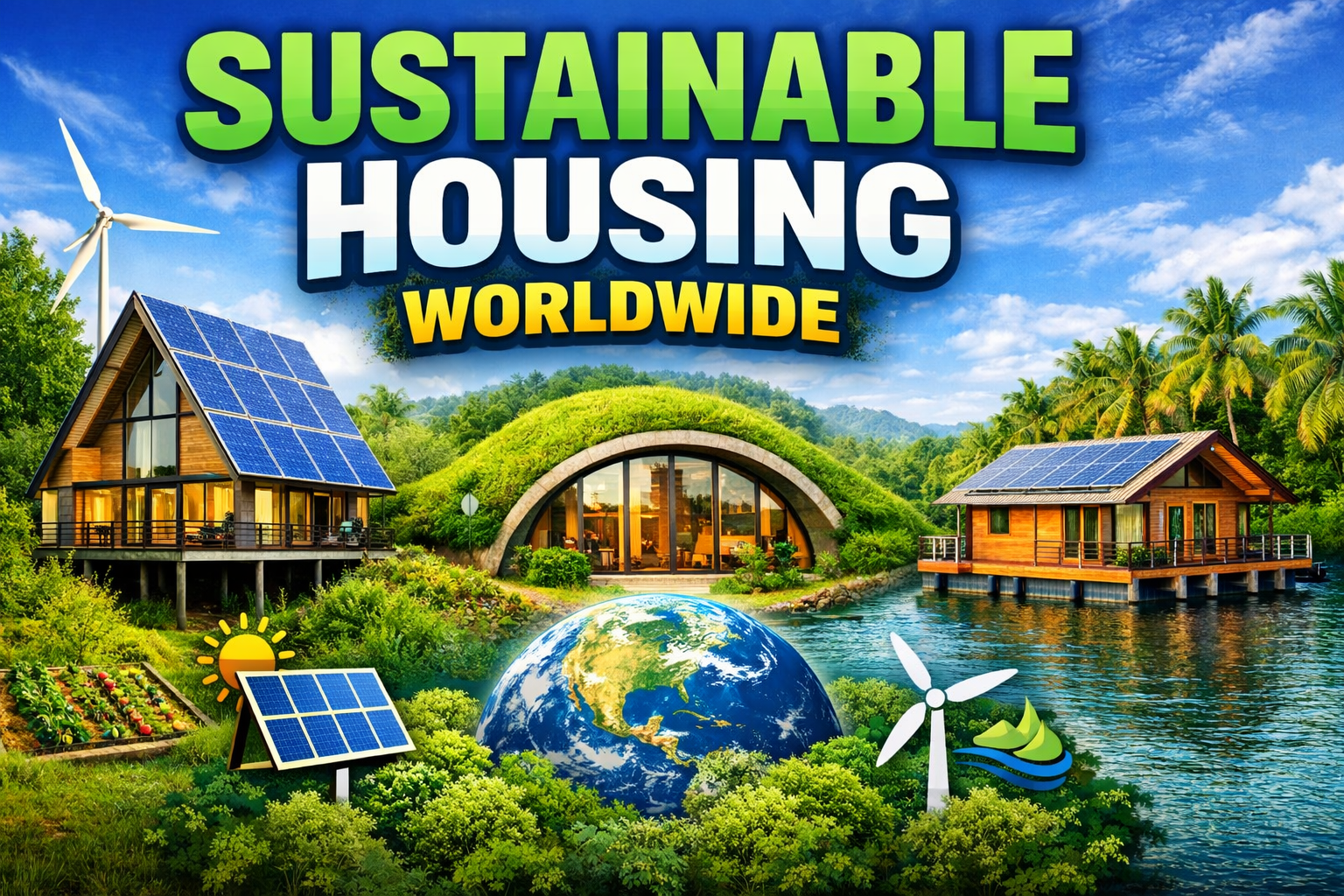
Sustainable Housing Worldwide: The Future of Green Real Estate in 2026
Explore sustainable housing worldwide in 2026. Learn how green buildings, energy-efficient homes, and eco-friendly real estate are shaping the future of global property investment.
Introduction
Sustainable housing is no longer a niche concept—it has become a global priority. As climate change, energy consumption, and urban population growth reshape the world, governments, developers, and investors are turning toward eco-friendly housing solutions.
In 2026, sustainable housing is transforming the real estate sector by combining environmental responsibility with long-term economic value. Buyers are not just looking for homes—they are seeking energy-efficient, environmentally conscious living spaces that reduce costs and support healthier lifestyles.
This shift marks the rise of green real estate as the future of property development worldwide.
What Is Sustainable Housing?
Sustainable housing refers to residential developments designed to minimize environmental impact while maximizing energy efficiency, resource conservation, and long-term durability.
Key Principles of Sustainable Housing:
- Reduced carbon footprint
- Efficient use of energy and water
- Environmentally friendly construction materials
- Smart waste management systems
- Integration with natural surroundings
- Long-lasting, low-maintenance infrastructure
Sustainable homes aim to balance comfort, technology, and environmental stewardship.
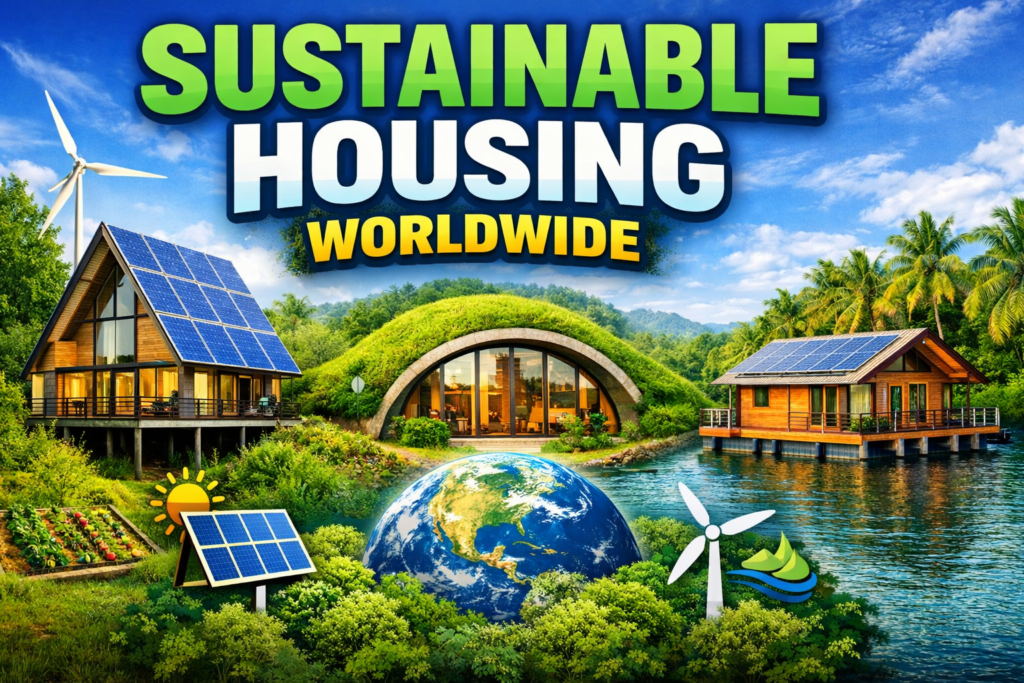
Why Sustainable Housing Is Growing Globally
1. Climate Change Awareness
Governments and consumers are prioritizing eco-conscious living to reduce greenhouse gas emissions and environmental degradation.
2. Rising Energy Costs
Energy-efficient homes significantly reduce electricity and utility expenses, making them financially attractive.
3. Government Regulations & Incentives
Many countries now mandate green building standards and offer tax benefits or subsidies for sustainable developments.
4. Investor Demand for ESG Assets
Institutional investors increasingly focus on ESG (Environmental, Social, Governance) criteria when selecting real estate investments.
5. Health and Wellness Considerations
Sustainable housing promotes better air quality, natural lighting, and healthier living environments.
Key Features of Sustainable Homes in 2026
Energy Efficiency
- Solar panels and renewable energy integration
- Smart energy management systems
- High-performance insulation reducing heat loss
Water Conservation
- Rainwater harvesting systems
- Low-flow plumbing fixtures
- Greywater recycling technologies
Eco-Friendly Materials
- Recycled or locally sourced construction materials
- Low-carbon concrete alternatives
- Sustainable wood and natural finishes
Smart Technology Integration
- Automated energy monitoring
- Climate-responsive home systems
- AI-powered resource optimization
Green Spaces & Urban Design
- Rooftop gardens and vertical landscaping
- Walkable, community-focused layouts
- Reduced dependence on vehicles
These features create homes that are both environmentally responsible and technologically advanced.
Global Regions Leading the Sustainable Housing Movement
Europe
European nations are pioneers in energy-efficient construction, with strict environmental regulations and widespread adoption of green certifications.
North America
Developers are increasingly integrating smart technologies with sustainable design to create net-zero homes and eco-communities.
Asia-Pacific
Rapid urbanization has driven the adoption of sustainable high-rise housing and smart-city initiatives.
Middle East
Large-scale developments are incorporating renewable energy and climate-adaptive architecture to address environmental challenges.
Sustainability is now influencing both developed and emerging markets alike.
Benefits of Sustainable Housing for Homeowners
✔ Lower long-term utility and maintenance costs
✔ Healthier indoor living environments
✔ Increased property value over time
✔ Reduced environmental impact
✔ Access to government incentives and rebates
✔ Future-proof housing aligned with global regulations
Sustainable homes offer a unique combination of financial savings and ethical living.
Why Investors Are Focusing on Green Real Estate
Real estate investors increasingly view sustainable housing as a resilient, future-ready asset.
Investment Advantages:
- Higher demand from environmentally conscious buyers
- Stronger occupancy rates in green-certified buildings
- Lower operational costs improving rental returns
- Long-term regulatory compliance reducing risk
- Premium resale value compared to traditional properties
Green real estate is becoming a strategic investment category, not just a lifestyle choice.
Technological Innovations Driving Sustainable Housing
Technology is accelerating the adoption of eco-friendly housing worldwide.
Innovations Include:
- Net-zero energy building systems
- Smart grids integrating renewable power
- Sustainable modular construction
- Carbon-tracking building analytics
- AI-driven environmental optimization
These technologies enable cities to scale sustainability while maintaining affordability and efficiency.
Challenges Facing Sustainable Housing
Despite rapid growth, some barriers remain:
- Higher upfront construction costs
- Limited awareness in developing markets
- Need for skilled green-building professionals
- Variations in global sustainability standards
- Financing challenges for eco-projects
However, as technology becomes more accessible, these challenges are steadily diminishing.
The Future of Sustainable Housing
By 2030, sustainable housing is expected to become the global standard rather than an alternative.
Expected Developments:
- Carbon-neutral residential communities
- Self-sustaining smart neighborhoods
- Widespread adoption of renewable energy homes
- Integration of nature into urban environments
- Circular construction models reducing waste
Sustainability will shape not only how homes are built—but how cities themselves function.
How Buyers Can Choose a Sustainable Home
When evaluating eco-friendly properties, consider:
✔ Energy efficiency ratings or certifications
✔ Use of renewable energy systems
✔ Water-saving infrastructure
✔ Sustainable construction materials
✔ Smart-home environmental controls
✔ Long-term maintenance and operating costs
Making informed choices ensures both environmental impact and financial value.
Conclusion
Sustainable housing worldwide is redefining the future of real estate by aligning environmental responsibility with economic practicality. In 2026, green homes are no longer a luxury—they are a necessity driven by climate realities, technological innovation, and evolving consumer expectations.
As governments, developers, and investors continue embracing eco-conscious solutions, sustainable housing is set to become the foundation of modern living.
The homes of the future will not only shelter us—they will actively contribute to a healthier planet and a more resilient global economy.
